Saturday, May 3, 2025

Each One Teach One: What I learned about Confirmation Bias


I recently learned about the concept of confirmation bias, and it completely reframed how I think about the way we consume information and form opinions. Confirmation bias is a type of cognitive bias that refers to our natural tendency to favor information that supports our existing beliefs and to dismiss or undervalue information that contradicts them. Whether we realize it or not, this bias influences our perceptions, decisions, and everyday interactions.

Confirmation bias shows up in countless areas of life. One of the most noticeable is how we consume the news. Many people seek out media outlets that align with their political or social views, subconsciously avoiding sources that may challenge their stance. This creates echo chambers where only similar views are amplified, making it harder for us to understand or empathize with those who think differently. These echo chambers shape how we interpret the world around us.

What surprised me is that confirmation bias doesn’t just affect people; it can even be found in artificial intelligence. AI systems like ChatGPT are trained on datasets generated by humans, and they can inherit the same patterns of thinking, including cognitive biases. A recent study showed that AI can reflect human-like overconfidence and confirmation bias because of the way it's trained. 


Learning about confirmation bias helped me realize how easy it is to get trapped in a cycle of self-affirmation. Whether it’s scrolling through social media, watching YouTube videos, or reading articles, we’re constantly presented with opportunities to choose what we see, and often, we choose what makes us feel "right." This pattern is dangerous because it makes it harder to grow. It closes us off from learning new things and evolving our perspectives.

Understanding this bias is especially important in today’s world, where we're bombarded with information 24/7. If we're not intentional, it’s easy to mistake familiarity for truth. Being aware of confirmation bias encourages us to pause and re-evaluate. Are we seeking out other viewpoints? Are we truly open to changing our minds? Are we surrounding ourselves with people who challenge us, or just those who agree with us?

Ultimately, recognizing and addressing confirmation bias is about building intellectual humility. It’s about staying curious instead of being comfortable. It’s a reminder that while our brains are wired for efficiency, real understanding comes when we stretch ourselves beyond our comfort zones and take in ideas that might not fit neatly into what we already believe. That’s where growth happens.

Thursday, May 1, 2025

The Age of AI

Watching  In the Age of AI, I walked away fascinated and frightened. The documentary opened my eyes to the massive transformation artificial intelligence is causing. It is not only impacting technology or jobs, but also altering the structure of our society. AI has created incredible progress in areas such as healthcare and transportation, but it does not come without its downsides, many of which are highly unsettling. AI has evolved beyond just being a technological tool; it is now a political, ethical, and economic force in our world.

On the positive side, AI has amazing capabilities. One example of this is Google's DeepMind. DeepMind uses AI to detect and monitor dozens of eye diseases. Researchers believe that DeepMind will be highly useful in quickly and efficiently diagnosing eye diseases that affect more than 625,000 people in the UK alone. Other innovations include self-driving trucks and IBM Watson, a system that analyzes patient records and cross-references them with medical databases. 


These advances could help save lives, increase efficiency and productivity, and reduce human error. Since AI can learn from data and make accurate predictions, it has the power to help solve some of humanity's biggest challenges. 

However, AI's darker implications cannot be ignored. The film emphasized China's use of AI for things such as surveillance. In some parts of China, AI is used to fine and publicly shame jaywalkers. In other parts, AI is being utilized to give people social credit scores, eerily similar to the very uncomfortable "Nosedive" episode of the show Black Mirror

This is one of the most disturbing aspects of AI to me: the ability of governments to weaponize AI to control people and limit freedoms. Even in democracies, privacy is at risk thanks to AI. Massive tech companies in the US are collecting data and using artificial intelligence to attempt to manipulate our behavior through targeted advertisements and content. 


The issue of privacy is where I feel most conflicted. While AI can improve convenience and safety, it also opens the door to unnecessary surveillance and identity theft. If personal data falls into the wrong hands, irreparable damage could be done. There is a delicate balance between comfort and control, one that I worry is in danger of tipping the wrong way. 

Overall, the documentary made me realize that AI is not in the future; it is here now. We all need to act thoughtfully and quickly to shape and control its impact. 

Friday, April 25, 2025

Society's Relationship with Technology


Since the Stone Age, when humans used stone tools to hunt, prepare food, clean, and build homes, human advances in technology have continued to shape and revolutionize life as we know it. Technology has become intertwined with our society and culture, impacting the way that we communicate, work, interact with the world, and meet our needs and wants. From sundials to intricate and complex cell phones and self-driving cars, technology has been a crucial part of our everyday lives. This is especially true today, in the 21st century, a time where it is nearly impossible to go an entire day without interacting with technology of some sort. 


There is no doubt that improvements in technology have positively impacted our lives, but is all of its impact good? Technology’s relationship with society is a complicated one, filled with both positives and negatives. 


Positive Effects

Technology has produced many positive impacts across nearly every aspect of daily life. This includes communication, access to information, healthcare advancements, and economic growth. 


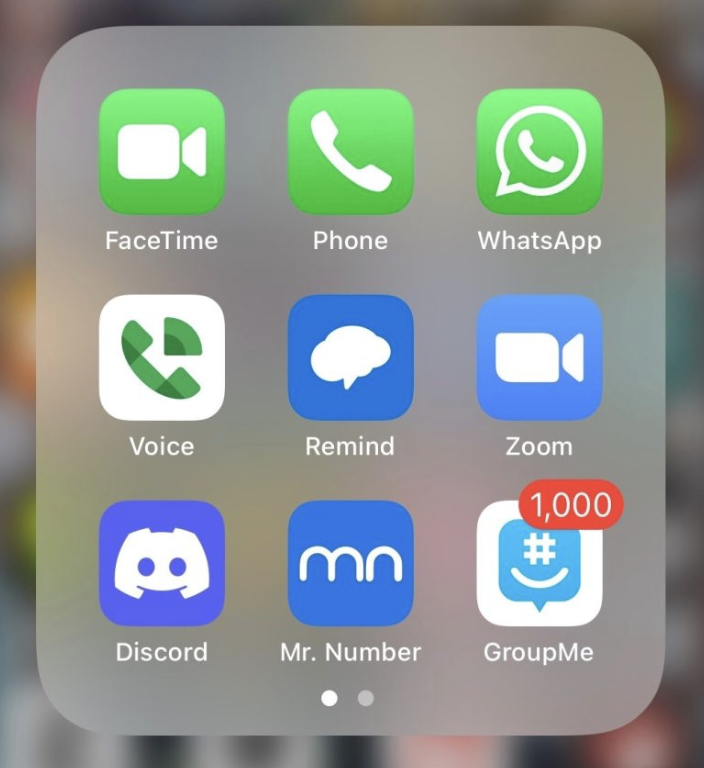
Apps like Zoom, WhatsApp, and GroupMe have greatly improved communication and interaction. During the pandemic, companies, businesses, and even schools relied on Zoom to communicate. People could continue to connect, talk, and work with one another from the comfort of their living room or bed during an unprecedented, scary period when nearly no one was allowed out of their homes. During the shutdown, Zoom’s usage surged by 500% because it enabled people to interact and continue projects and work that they might have otherwise halted. 


Additionally, technologies such as the Apple and Fitbit watches have improved the health of many people. In fact, research has shown that using a Fitbit can potentially help promote healthier lifestyles for people by encouraging them to be proactive in monitoring and improving their physical activity. Further, the watches allow people to be mindful of their heart rate, sleep, and even detect irregularities. 


Other technologies, like Magnetic Resonance Imaging, or MRI machines, allow medical professionals to detect and diagnose disease as well as monitor the progress of treatment, ultimately improving patient care and outcomes. 


Negative Effects

Although technology has had monumental beneficial impacts, our increased reliance on and creation of new technology also come with a host of different problems.


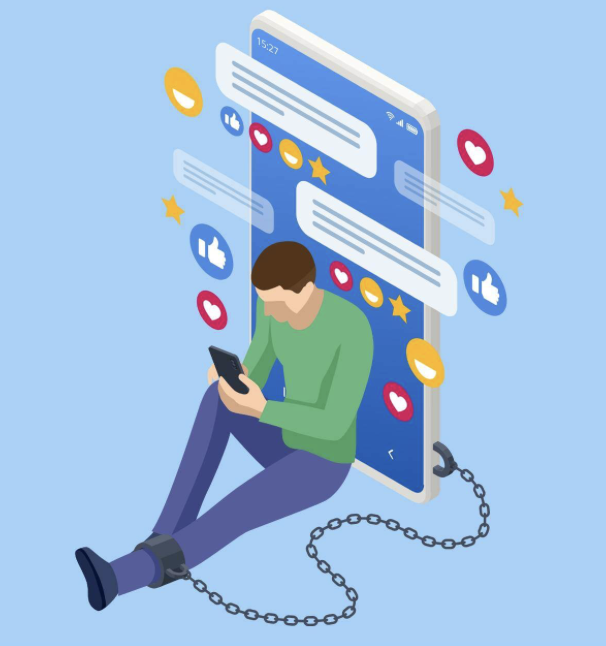
One problem that has been produced by our growing dependence on technology is social media addiction. ​Research done by Dr. Ofir Turel, a researcher in technology addiction and professor at California State University, suggests that roughly 10 percent (33.19 million in 2021) of Americans are at risk of social media addiction


Social media addiction comes with its own set of problems, including decreased physical activity, loss of face-to-face communication, and isolation. These problems are only made worse by the rapid advancement of AI. Take, for example, the story of Sewell Setzer, a 14-year-old boy who killed himself after falling in love with an AI chatbot who convinced him to completely isolate himself from those around him. 


Another problem, and one that many people do not know about, is e-waste. Do you know what happens to your electronic devices once you throw them away? Electronic waste, ranging from mobile phones to refrigerators and washing machines, is very hard to get rid of, and its disposal isn’t as easy and straightforward as it may seem. The fact is, many people have no idea what actually happens when these electronics are thrown away. 


What many don’t know is that electronic waste is sent in unsustainably massive amounts to Ghana, where it’s then thrown in landfills, where workers have to extract precious metals from it with no protection at all. Once the metals (iron, copper, brass, etc.) have been removed via fire, the workers typically burn the invaluable parts down, releasing a multitude of dangerous gases into the atmosphere, and eventually breathing them, causing immense damage to their lungs and airways. The truth is, this problem is much bigger than most people realize, and the consequences are devastating, both for the environment and the people handling the waste.


My relationship with technology


As a teenager and as a college student, I would be lying if I said that my own relationship with technology is not complicated. 


I use technology and the internet to do a host of different things: communicate with friends and family, complete schoolwork, entertain myself with shows and movies, etc. I spend a lot of time on either my phone, laptop, or iPad, and find myself constantly reaching for one of the three several times an hour. In fact, I don’t know what I would do if any of them were broken, lost, or taken. However, I am actively trying to be less reliant on them. Yes, I need them to do my work and to check in with my family, but I am working to use them as a tool to connect me with the world, not to isolate myself. 


While technology has undeniably shaped our world for the better, it’s crucial to remain mindful of its negative effects. Balancing innovation with responsibility will be key moving forward.

Saturday, April 12, 2025

EOTO: Echo Chamber


 The Webster's Dictionary defines an echo chamber as "a room with sound-reflecting walls used for producing hollow or echoing sounds." If you do a quick Google search, it is almost impossible to find out what an echo chamber is used for. This is because when most people say "echo chamber," they are speaking figuratively. 

What is a figurative echo chamber?

An echo chamber is any environment or space where a person is only interacting with views and information that confirms and reinforces their own beliefs. Many different environments can be considered an echo chamber. For example, your family could be creating an echo chamber of beliefs. If everyone in your household believes in all of the exact same principles, only certain views and opinions will be shared within the walls of your home. This leaves no space for new or different ideas to be communicated or even considered. There can also be a digital, online echo chamber, especially with the emergence and advancement of social media platforms like TikTok, Instagram, and Facebook. 

Many scholars, including psychiatrist Dr. Adam Howard, have done research on how private schools and universities, such as High Point, are easy homes for echo chambers. This is because private schools tend to attract and accept specific "types" of students, wealthy, white, etc, more than others. Although private schools do accept students who do not fit those demographics, they are generally in the overwhelming minority. This creates an echo chamber, an "epistemic bubble," as Dr. Howard refers to it, where only the majority beliefs and ideology are heard as opposed to a mix of views from people with diverse lived experiences. 

For example, in high school, I attended a private K-12 school where the majority of the student body was white and well-off. Additionally, many of the students had gone to the school all thirteen years, only had friends who went to their school or other private schools, dated within the same pool of roughly 130 people and did all of their extracurricular activities with the same people. Coming from a private middle school, I quickly noticed that many of the students who had gone to the school their entire lives held a lot of the same beliefs, one of them being that everybody magically had a car at 16. Although I knew that that was far from the truth, the other students had been socialized to believe it. This is because they only ever interacted with others who lived nearly identical lifestyles, which created an echo chamber. 

In summary, echo chambers can occur anywhere where information is shared and exchanged by a group of people. 


What causes someone to be in an echo chamber?

As I mentioned earlier, echo chambers can emerge in a variety of different environments. One of the biggest creators of echo chambers today, however, is social media. 

One reason is that platforms like Instagram and TikTok have algorithms that cater to users’ activity (likes, shares, saves, etc), creating echo chambers that only reinforce existing beliefs. If you interact positively with videos and content that reinforces your own ideas, social media will only continue to feed you with that specific set of beliefs, producing an echo chamber.

Another reason for this is because of how easy it is to find other like-minded people on social media. This allows for people to form digital communities (Facebook groups, for example) that share one or more very specific viewpoints. Additionally, it is common for people to follow creators who share their opinions and ignore those who don't. This results in a social media feed that serves as yet another echo chamber. 


So what if my environment only reinforces my own beliefs? They're correct!

But what if they're not? Allowing yourself to live in echo chambers introduces a host of problems, one of which is misinformation. If an assertion that is aligned with your other beliefs enters into your echo chamber, whether that be digitally or with your peers, it is nearly impossible to confirm whether or not that belief is factually supported because you will only see/hear things that confirm it.

For example, imagine if you were a person who was concerned with the safety of your community because you believed that the immigrants moving into your neighborhood were dangerous. Additionally, you surround yourself with other individuals and media that are against immigrants. One day, Donald Trump, someone you see as trustworthy and truthful, gets on national television and says that the immigrants in Springfield are dangerous and are eating people's pets. Everyone in your immediate circle believes it to be true and the media you consume agrees with Trump. As a result, you take no action to find out whether or not it is actually true because everything around you (in your echo chamber) tells you that it is true.


Other issues caused by echo chambers are developing a one-sided perspective, decreased political and societal awareness, and being less open to others' viewpoints. 

How to avoid/escape your own echo chamber

There are several steps you can take to avoid being in an echo chamber or escape one that you are already in. Two steps are to interact with people whose views differ from your own and to utilize multiple different sources for information and news. By doing so, you ensure that you will encounter views that counter your own, allowing you to equally consider and evaluate different arguments and make well-informed decisions about what you believe. 

Roger's Diffusion of Innovations


 The Diffusion of Innovations Theory explains how different products or ideas spread throughout a population. Dr. Everett M. Rogers developed the theory in the mid-1900s. Today, it still serves as an important lens through which we understand change over time.


Rogers identified five groups in the adoption process:

Innovators/Pioneers: These are the first people to adopt something new. They are risk-takers and are not afraid of change. This group includes people who create new products and ideas themselves.

Early adopters: This group consists of people who are interested in trying new technologies before they become mainstream. They are the guinea pigs and trendsetters of the groups. 

Early majority: The early majority is a group that paves the way for the more complete adoption of an innovation into society. They are a part of the general population, but adopt and accept new innovations before the average person. 

Late majority: This group of people is also a part of the general public. They are slightly slower to change, but follow others in adopting innovations into their daily lives. They accept new products and ideas after the average person.

Laggards: This group is much more reluctant to change and new ideas and services. They adopt new innovations into their lives significantly later than the average person, if at all. 

Roger's theory also explains that innovations spread more rapidly when they offer an improvement to something that already exists, are easy to understand and utilize, have trialability, and are visible to others. 


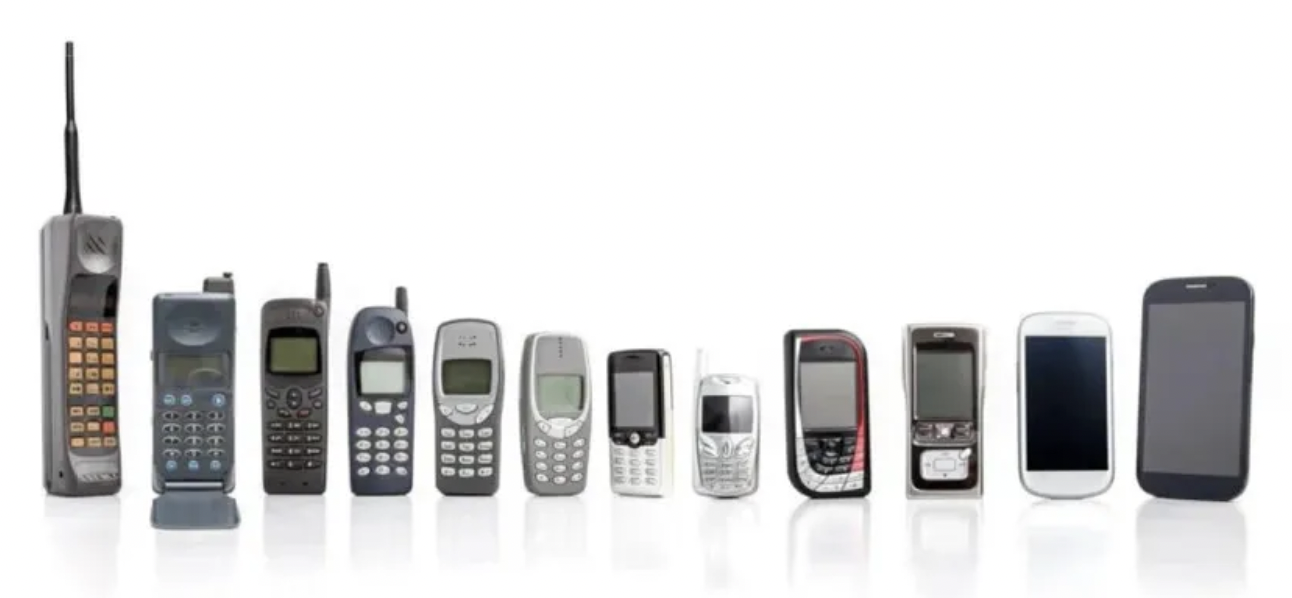
A great example of this theory is the rollout of smartphones


Innovators/Pioneers: The tech geeks who bought and/or invested in the earliest versions of the smartphone, like the BlackBerry or the original iPhone.

Early adopters: These were young professionals and trendsetters who quickly followed the innovators in adopting the smartphone.

Early majority: This group got involved once smartphones became more simplified and user-friendly. Additionally, the creation of apps made smartphones more essential to have, causing the early majority to accept them.

Late majority: The late majority waited until cell phones became more normalized and accessible in society.

Laggards: This group either stuck with their flip-phone until they had no choice but to give it up, or, like my tenth-grade teacher, never accepted the smartphone at all.


Overall, not every innovation succeeds. If it is not relevant or fails to connect with the people in the general market, it will fail regardless of how "good" it seems in theory. 

Obscure Viewpoints: Why aren't they in mainstream media?


"Israel strikes on Gaza kill 40 in 24 hours"

 "Photos: Bombed-Out Gaza University Becomes Shelter for Displaced Palestinians"

"Congress Hates Trade Wars—but Doesn't Mind Real Wars"

These are just a few of the many headlines on antiwar.com and The American Conservative. These headlines reflect a consistently critical and antiwar perspective, emphasizing human consequences, political hypocrisy, and institutional indifference to war and violence. Both sites use direct, human-centered language such as "kill" and "displaced," which contrasts with the more indirect, passive verbiage utilized by mainstream media. These differences in framing highlight not only stylistic choices but also a divide in how war is understood and reported. If these different perspectives bring important outlooks to light, why aren't these views highlighted more prominently in mainstream media?

Antiwar.com

Antiwar.com takes a more libertarian and non-interventionist view. Its core belief is that war is never justified and does not serve the public good. It strongly opposes any military intervention, whether in Eastern Europe, the Middle East, or Asia. Further, Antiwar.com focuses on the shortcomings of both of the US's political parties in sustaining war both internally and abroad. 

For example, Antiwar.com has a column titled "War at Home," which highlights the actions of US political figures like President Donald Trump and democratic senator Dick Durbin. The section also contains articles about internal struggles within the country, such as the large group of international students being stripped of their legal status

Antiwar.com also has a mix of sources. Some of the articles on its website are personally written by the writers and editors who work with Antiwar.com. Other articles, however, are links to works written by other publications, such as Associated Press News and The New York Times

This blend of commentary and curated content gives Antiwar.com both an independent voice and a connection to mainstream journalism. However, its writing reframes certain events with an emphasis on morality and libertarian values such as independence and freedom. 


The American Conservative

On the other hand, The American Conservative approaches war from a traditionalist and nationalist perspective on war. Like Antiwar.com, The American Conservative is largely opposed to war, but for different reasons.

The American Conservative rejects war because it believes that America should always come first. America should be focused on itself and its internal problems instead of being concerned about external struggles involving other countries. It takes after the values and opinions that Washington expressed in his 1796 Farewell Address: avoid foreign entanglements, avoid political factions, and avoid excessive debt. For The American Conservative, war not only distracts from internal challenges but poses a dangerous threat to the ideals and foundations set forth by our founders. 


Connection to Mainstream Media

Despite their ideological differences, Antiwar.com and The American Conservative share a common frustration: the near-total exclusion of anti-war voices from mainstream media. In major news outlets, war is regularly shared as a strategic, necessary evil, and even noble. Major outlets often play down war with passive language such as "collateral damage" and "operation" and rarely feature voices that question the necessity and morality of war. Whether it's Antiwar.com's libertarian critique or The American Conservative's nationalist warning, these perspectives challenge powerful interests and voices, making them easy to ignore. However, if these smaller outlets are sharing views, ideas, and information that is not seen elsewhere, maybe the silence of bigger media sources says much more than we think. 

Wednesday, April 9, 2025

Each One Teach One: What I learned about Carrier Pigeons


Before phones, email, text messages, or even the postal service, humans relied on a different method of receiving mail and relaying messages. Intelligent, reliable, and low maintenance, it was arguably the best and most creative communication system in history: the carrier pigeon. These birds were the OG Airdrop with more feathers and fewer connectivity issues.

History of carrier pigeons

Carrier Pigeons were used back in Ancient Egypt, Mesopotamia, and Persia to carry messages, military news, and critical weather-related news such as an impending flood. The Greeks and Romans continued to use pigeons to communicate across empires. In Greece, people even used pigeons to share the results of the Olympic Games.

Starting in the 19th century, cities like New York utilized Carrier Pigeons for news reports, to carry stories for publication, and for wartime communication. Specially trained pigeons could even fly with small packages on their backs, such as those used by German Pharmacist Julius Neubronner to send medication to patients and, later on, to take bird's-eye pictures and videos of the world.


Negative Effect

Have you ever seen a pigeon nest? If not, believe me when I say that they are absolutely terrible. Not only do they have an average of five sticks and random pieces of trash, but they are also built in the most random and inefficient places. However, this is not because pigeons are against interior design or because they are lazy, it is actually our fault.

We domesticated pigeons to use to carry mail and share messages, which they proved to be very good at. However, as technology evolved, humans did not need to rely on pigeons anymore and eventually abandoned them. This is why they're bad at building nests. Before being domesticated, pigeons kept their eggs in crevices on the side of cliffs where they lived, therefore, they never needed to create nests. After domestication, they did not return to those environments. This is one negative effect of domesticating pigeons to use for communication.


Famous Carrier Pigeon

One of the most famous Carrier Pigeons was G.I. Joe, who was awarded the Dickin Medal in 1946. Joe was a member of the US Army Pigeon Army during World War II. He saved countless allied soldiers and citizen lives after flying 60mph to deliver a message calling off a scheduled airstrike.

G.I. Joe is just one of many carrier pigeons who risked everything to deliver crucial messages, flying regardless of injury or exhaustion. 

In summary, pigeons are much more incredible than most people know. Today, you can join a waitlist to send a message by carrier pigeon. There are just over twenty-seven thousand people on the list!


Sunday, April 6, 2025

Privacy on and offline


In a world where every scroll, click, and search leaves behind a digital footprint, protecting your privacy is no longer a choice, it is essential. Today, we live in a world where simply sitting and scrolling on social media or making a search on Google is no longer a private activity. Instead, companies are watching and tracking all of our digital moves to collect data on us, send targeted ads to our devices, and sell our information to third parties. 

Just think of how many apps you have on your phone and how many times you use them. According to recent research, the average smartphone user opens at least 10 apps a day and 30 apps per month. Imagine how much information companies can collect from your app usage each day. 


The topic of online privacy is especially relevant to people in my generation who have grown up in this digital age. I remember being ecstatic to receive my first phone at just seven years old. Although it could only do two things: call and text, I cannot begin to imagine how much information I have given up and how many problematic terms I have unknowingly agreed to over the past twelve years: my number, address, email, birthdate, name, etc. 

How to protect your privacy

Although it is difficult to escape the internet in our technology-focused society, there are a few steps you can take to protect your privacy online. 

Read the terms: Can you remember how many times you've actually read the terms and conditions of an app or website? I can: zero. It is extremely easy to skip over long and hard-to-read contracts when using a new app. However, when you do, you can miss terms such as Meta's ability to use your content to train their AI systems. By simply taking the time to read over the terms, you can save yourself from entering into binding contracts that allow companies to make malicious use of your information and content. 

Evaluate the trade-offs and benefits: By reading the terms and conditions, you can also make informed decisions about what apps you are using. Are the benefits you gain from using it worth giving up certain information and having it potentially sold or used? If not, do not use that product and find alternatives.


What should the government do?

Enforce the rules/laws: Although the US does have some laws in place to protect our online privacy, they are limited, vague, and not as enforced as they should be. For example, the Children's Online Privacy Protection Act (COPPA) requires companies to obtain parental consent to collect information from children under 13. However, there are many ways to get around this law, many companies are not in compliance with it, and there are minimal, ineffective punishments. By enforcing stricter, more specific laws and consistently punishing companies who don't comply, the government would help ensure that all citizens' online privacy is protected. 

Saturday, March 22, 2025

Values of Free Expression


Freedom of speech and expression are a cornerstone of our democracy and play a fundamental role in shaping the morals and ideals that our country is built upon. It ensures that people have the right to freely articulate their views and opinions without fear of retribution or censorship. It allows for the free exchange of diverse ideas, cultures, and beliefs between people. Free speech is necessary for holding leaders accountable and advocating for change and progress. It also empowers citizens to speak out against justice, call for reform, and share their lived experiences with others who see the world differently. Overall, free speech is imperative for a strong, connected democracy. 

This concept has been a major topic of discussion as the country continues to grapple with what it means to be able to freely express yourself. People struggle to agree on what people should(n't) be able to say, the role of government in censorship and media, how to protect minority voices, and the interpretation of the First Amendment

The eight values of free expression are often used to explain why free speech and expression are important in a democracy, drawing legal and political concepts. The eight values of free expression are as follows: 

1. Marketplace of ideas

2. Participating in Self-government

3.  Stable Change

4. Individual Self-Fulfillment

5. Check on Governmental Power

6. Promote Tolerance

7. Promote Innovation

8. Protect Dissent

Protect Dissent

In my opinion, one of the most important values of free expression is protecting dissent. Protecting dissent means safeguarding the expression of those who hold values and/or opinions and beliefs that are contrary to those of the majority. I believe that this is especially important in a country like the United States, where so much of our legal and societal decision-making is led by the "majority." Although we typically regard this system as a good thing, we cannot always trust that the majority will always make the best choices or that they will consider the needs of the minority. This is why people need to be able to speak out against poor decisions because otherwise, they go unchecked. Additionally, dissent means that people in power are held accountable. If people cannot speak out against the government, we risk losing democracy and slipping into authoritarianism. Lastly, protecting dissent builds a more resilient and tolerant society that is not afraid of or opposed to disagreements and debates.


A historical example of dissent leading to positive change is Martin Luther King Jr. and the Civil Rights Movement. King consistently challenged the status quo, criticizing unfair and unjust laws. His marches, speeches, and constant speaking out against the government's treatment of black and brown people led to monumental changes in terms of equality and civil rights. If King were afraid to share his opinion because not everyone agreed, we might not have had the significant reform that we have.

Marketplace of Ideas

The concept of a Marketplace of Ideas was started by English philosopher John Milton. It argues that we should allow all ideas and opinions, good or bad, to be freely expressed because only the best will prevail in society. Although this concept seems logical and fair, what happens when the people who are supposed to be the most educated and influential are the ones making false statements? During a debate amid the 2024 presidential election, then-former President Trump said that immigrants in Springfield, Ohio, were eating the pets of the people who lived there. Although many dismissed the statement as false, some believed his assertions fueled feelings of fear and anger toward immigrants. Does the Marketplace of Ideas reach officials like Trump, or should they be held to a higher standard of truthfulness and professionalism? Should we be concerned?

The Marketplace of Ideas also plays a pivotal role in the ongoing conversation about censorship, both online and in print media. Take the extensive (and growing) list of banned books, for example. Is it acceptable for the government to choose which voices and opinions are the "right" ones for us to read about? This is also the source of debates surrounding social media. Meta recently removed fact-checking from Facebook and Instagram. Many disagree on whether this is the best step to protect free speech and the pooling of ideas and opinions or if this is just opening up a path for more dangerous misinformation to be spread online. 

As we continue to navigate this evolving world of free speech in a digital age, we must continue to protect dissent, demand the truth, and make sure that every voice, regardless of how unpopular or small it may be, has a place in our society. 

Monday, March 17, 2025

EOTO: The Typewriter


We've all experienced it: the old-fashioned professor who believes that technology is the enemy and insists on hand-writing everything. You sit to write your first assignment and about halfway through, you experience what no college student in the 21st century should have to endure... a serious hand cramp. It is at this point that you make an appointment with your academic advisor to drop the class as soon as possible.

Most students do not have to go through this grueling experience thanks to modern technology, and more specifically, the computer. Before the computer and digital documents, though, there was the typewriter, a writing machine that revolutionized writing in the late 19th and early 20th centuries. 


The History of the Typewriter: Who created it and why?


Several inventors experimented with creating writing machines before the modern typewriter came into existence. Some of the most notable inventors are Henry Mill, Giuseppe Pellegrino Turri, William Austin Burt, and Charles Thurber. 


Henry Mill

Inventor Henry Mill patented a writing device in 1714, which is largely regarded as one of the first typewriters. However, no surviving physical models, documents, or details about Mill's device exist. 

Giuseppe Pellegrino Turri

Giuseppe Turri, an Italian inventor, is said to have also created one of the earliest typewriters so that his lover, who had gone blind, could write on her own. He is also the inventor of carbon paper, which he created to supply his machine with ink. 

William Austin Burt

William Austin Burt also created and patented a typewriter in hopes of speeding up the writing process. The machine utilized a rotating lever to release ink onto paper. However, the machine was extremely slow and therefore, was not commercially successful. 

Charles Thurber

Aiming to aid the nervous and blind, Charles Thurber invented the closest machine to the modern typewriter. His machine featured a circular keyboard and paper on a wheel that turned. Although his creation contained many of the same elements of a modern typewriter, it was rather slow and bulky and was never commercially manufactured. 


Christopher Latham Sholes

Many inventors attempted to make early versions of the typewriters that didn't quite come to life. They were either too bulky, inconvenient, slow, or did not perform well commercially. This is why American inventor Christopher Latham Sholes gets most of the credit for the typewriter. He created the first writing machine that worked, sold, and changed the way people wrote. Before the Sholes' invention, everything from letters to newspapers was being written by hand, and there was a need for a faster, more efficient way to write things.

Sholes was inspired to create the typewriter in 1867 after reading an article talking about a new machine invented by the British. He patented his model in 1868 and over five years, made several improvements to it before signing a contract with E. Remington and Sons in 1873 and placing the invention on the market a year later. 

 Soon after its release, Sholes' typewriter was renamed the Remington. It featured a QWERTY keyboard layout (still standard on English keyboards today) and manual carriage return. Additionally, the first model could only type uppercase letters, but this was later changed with the second model when shift functionality was switched. 


Mark Twain purchased a Remington and wrote The Adventures of Tom Sawyer, becoming the first author to ever publish a manuscript written using a typewriter.

The Impact

The typewriter had numerous impactful effects on communication and media. First, it increased efficiency in writing since writers could type documents and media much faster than they could hand write them. It also helped increase standardization and legibility across written communication. Unlike handwritten documents which vary in neatness, readability, and style, typewritten work produces uniform characters and spaces. Additionally, the typewriter completely reshaped the role of women in the workplace. It created roles such as secretary and typist, positions that women were able to easily step into. It also gave women a sense of independence, encouraging them to open their own businesses and schools. However, this also reinforced gendered labor roles and led to women being hypersexualized and stereotyped in the workplace.

Despite its shortcomings, the typewriter produced more positive than negative impacts on media and the workforce. In fact, the typewriter was so revolutionary that every year, on June 23rd, people celebrate National Typewriter Day

Wednesday, March 12, 2025

The Supreme Court


Composed of nine justices with lifetime appointments, the Supreme Court is not just a final destination in the legal system but the driving force behind many changes in American life. Whether they are ending segregation or overturning past decisions, their rulings can completely reshape American life and cause long-lasting impact. If you are not paying attention to the Supreme Court, you are disregarding the one part of the American government that does not need to campaign to impact your future. 

The Court receives thousands of petitions each year but only hears roughly 100-150 cases and can pick which cases they review.  The Supreme Court is the most powerful judicial body, whose power is outlined in the US Constitution. The Court is tasked with protecting liberties and rights, as well as ensuring that all of the other branches of government adhere to the values and power limitations set forth by the framers. That being said, the Court's legitimacy stems from the endowed to them by the citizens of the country. 


What I learned about the SCOTUS

Before watching the video about the Supreme Court, I knew baseline information about their role and responsibilities. However, I gained much more knowledge about how the Court carries out those responsibilities. For example, I was surprised to learn that each justice reads and decides cases completely on their own before they make their overall ruling. Before learning more, I had assumed that the justices only decided after conversing and debating with one another. Additionally, I was both shocked and elated to learn that despite the vast number of petitions it receives, the Court carefully considers each petition individually, regardless of who it is sent in by.


The most important aspect of the Supreme Court

One of the most important components of the Supreme Court is the impartiality of the justices. Despite being appointed to the Court by the president, justices are supposed to be non-partisan and apolitical. This is to prevent partisan bias from affecting their rulings. However, I question whether anyone can truly be completely impartial. With the constant presence of media and political content in our lives, it's nearly impossible to avoid forming opinions that lean either liberal or conservative. Additionally, if justices are apolitical, how does a president, a political actor, choose who they want on the Court? I would assume that they would want to choose someone who sees the world the same way that they do. This raises the question of whether or not a system created by political actors can produce apolitical justices. 


My takeaways 
Learning more about the Supreme Court has made me realize how powerful and, most importantly, how complex the Court is. The Court can make decisions, such as Brown v. Board of Education, that completely restructure and reshape the way that Americans live and interact with one another. I also now have a deeper understanding of how the SCOTUS reaches its decisions and the work and time that goes into each ruling. Lastly, I acknowledge the complexity, difficulty, and importance of impartiality within the Court. Citizens need to stay engaged with the Court, especially in the coming years, no matter how small, indirect, or invisible the decision may seem.